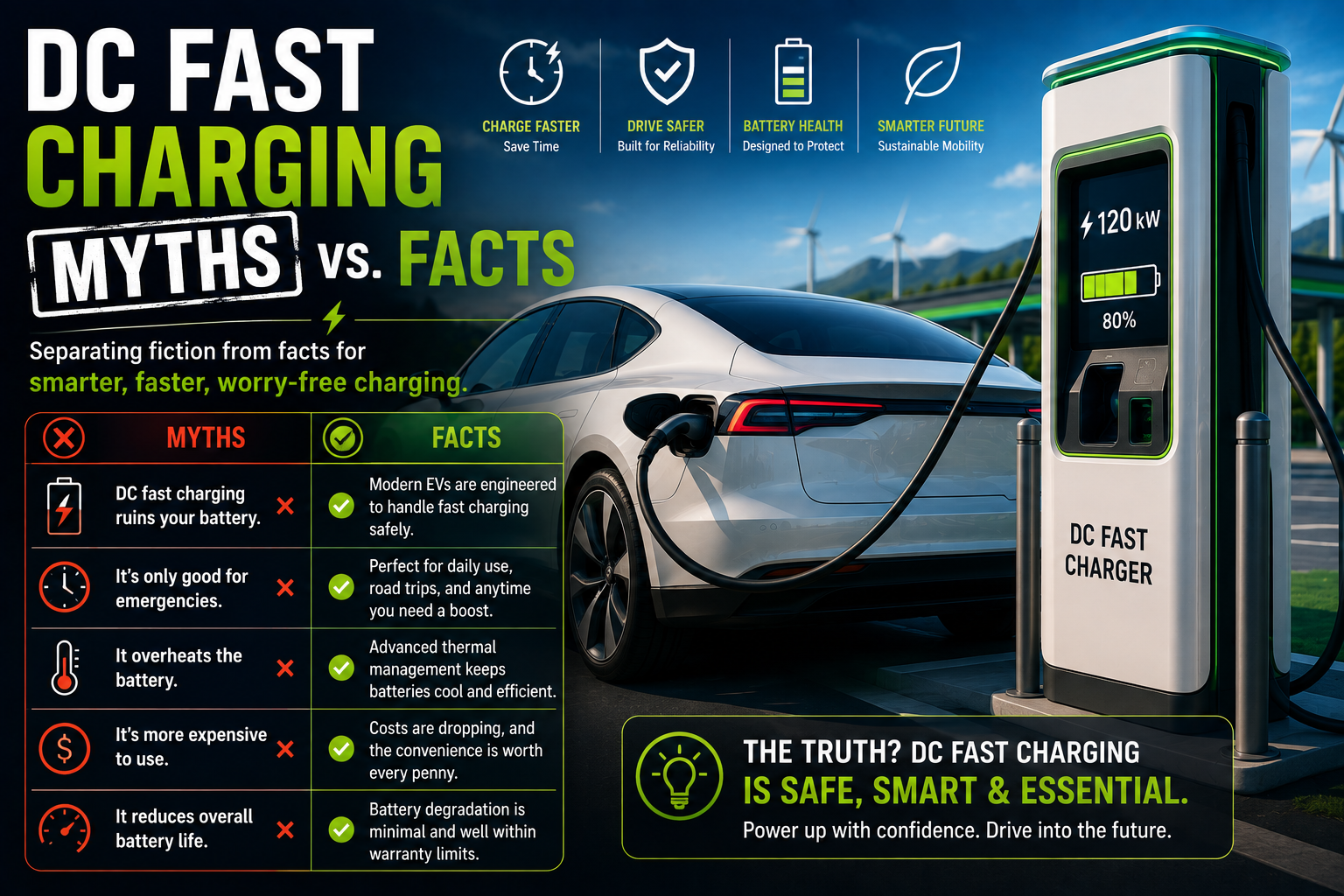
In the past, electric vehicles (EVs) were often criticized for their limited range and long charging times, but with the advent of DC fast charging, these concerns have been largely alleviated. However, several myths still surround DC fast charging, deterring potential EV buyers. Before the widespread adoption of DC fast charging, EV owners had to rely on Level 1 or Level 2 charging, which could take up to 24 hours to fully charge a vehicle. Now, with DC fast charging, EVs can be charged to 80% in under 30 minutes.
As the demand for EVs continues to grow, it is essential to separate fact from fiction when it comes to DC fast charging. The increased availability of DC fast charging stations has significantly reduced range anxiety, making long-distance travel in EVs more feasible. Furthermore, advancements in DC fast charging technology have led to faster charging speeds, improved efficiency, and reduced costs.
The shift towards DC fast charging has transformed the EV landscape, enabling drivers to charge their vehicles quickly and conveniently. This, in turn, has contributed to the growing popularity of EVs, with many countries investing heavily in the development of DC fast charging infrastructure. With the continued expansion of DC fast charging networks, EV adoption is expected to accelerate, driving a significant reduction in greenhouse gas emissions and air pollution.
Despite these advancements, numerous misconceptions about DC fast charging persist, which can hinder the widespread adoption of EVs. It is crucial to address these myths and provide accurate information to potential EV buyers, helping to alleviate concerns and promote a better understanding of DC fast charging technology.
The Basics of DC Fast Charging
DC fast charging is a type of charging that uses direct current (DC) to charge electric vehicles. This method of charging is significantly faster than Level 1 and Level 2 charging, which use alternating current (AC). DC fast charging stations can charge EVs to 80% in under 30 minutes, making it an ideal solution for long-distance travel. The high-power output of DC fast chargers enables them to supply a large amount of energy to the vehicle’s battery in a short amount of time, reducing charging times substantially.
DC Fast Charging Methods Worth Knowing
1. Combined Charging System (CCS)
The Combined Charging System (CCS) is a widely used DC fast charging standard that combines AC and DC charging in a single connector. CCS chargers can supply up to 350 kW of power, making them one of the fastest DC fast charging methods available. The CCS standard has gained widespread acceptance, with many EV manufacturers adopting it as their preferred charging method.
- Advantages:
- Fast charging speeds: CCS chargers can charge EVs to 80% in under 30 minutes.
- Wide compatibility: CCS is supported by many EV manufacturers, making it a versatile charging method.
- High-power output: CCS chargers can supply up to 350 kW of power, reducing charging times significantly.
- Current Limitations:
- Cost: CCS chargers are generally more expensive than other DC fast charging methods.
- Complexity: The CCS standard requires a more complex charging system, which can increase the risk of technical issues.
2. Tesla Supercharger
Tesla’s Supercharger network is a proprietary DC fast charging system designed specifically for Tesla vehicles. The Supercharger network can supply up to 250 kW of power, enabling Tesla owners to charge their vehicles quickly and conveniently. The Supercharger network has expanded rapidly, with thousands of charging stations available across the globe.
- Advantages:
- Fast charging speeds: Tesla’s Supercharger network can charge Tesla vehicles to 80% in under 45 minutes.
- Extensive network: The Supercharger network has a large number of charging stations, making it easy for Tesla owners to find a nearby charger.
- Convenient: The Supercharger network is designed to provide a seamless charging experience, with many stations located near shopping centers and restaurants.
- Current Limitations:
- Compatibility: The Supercharger network is exclusive to Tesla vehicles, limiting its use to other EV manufacturers.
- Cost: While Tesla owners can charge their vehicles for free at Supercharger stations, other EV owners may need to pay a fee to use the network.
| Charging Method | Power Output | Charging Time | Compatibility |
|---|---|---|---|
| CCS | Up to 350 kW | Under 30 minutes | Wide compatibility |
| Tesla Supercharger | Up to 250 kW | Under 45 minutes | Exclusive to Tesla vehicles |
The Impact on Consumers
✔ Reduced range anxiety
DC fast charging has significantly alleviated range anxiety, enabling drivers to travel long distances without worrying about running out of charge. With the ability to charge their vehicles quickly, EV owners can enjoy a more convenient and flexible driving experience.
✔ Increased adoption of EVs
The availability of DC fast charging has contributed to the growing popularity of EVs, as consumers become more confident in the ability to charge their vehicles quickly and conveniently. As a result, many countries have seen a significant increase in EV adoption, driving a reduction in greenhouse gas emissions and air pollution.
✔ Improved charging convenience
DC fast charging has made charging more convenient, with many charging stations located near shopping centers, restaurants, and other public areas. This enables drivers to charge their vehicles while they shop or dine, making the charging experience more enjoyable and convenient.
✔ Enhanced driving experience
DC fast charging has enhanced the overall driving experience, enabling drivers to enjoy a more flexible and convenient path. With the ability to charge their vehicles quickly, EV owners can focus on the road, enjoying the benefits of electric driving without the worry of running out of charge.
✔ Reduced charging costs
DC fast charging has reduced charging costs, as many charging stations offer competitive pricing and membership programs. This has made EV ownership more affordable, enabling drivers to enjoy the benefits of electric driving without the high cost of fuel.
✔ Increased investment in charging infrastructure
The growth of DC fast charging has driven investment in charging infrastructure, with many companies and governments investing heavily in the development of new charging stations. This has created new jobs and stimulated economic growth, while also supporting the adoption of EVs.
How This Will Evolve
- Further advancements in DC fast charging technology, enabling faster charging speeds and higher power outputs.
- Expansion of DC fast charging networks, with more charging stations being installed in public areas and along highways.
- Increased adoption of EVs, driven by the growing availability of DC fast charging and the declining cost of EV technology.
- Development of new business models, such as charging-as-a-service and membership programs, to support the growth of DC fast charging.
- Integration of DC fast charging with other technologies, such as solar power and energy storage, to create a more sustainable and efficient charging experience.
- Standardization of DC fast charging protocols, enabling greater interoperability between different charging systems and networks.
Worth Remembering
DC fast charging has revolutionized the electric vehicle industry, enabling drivers to charge their vehicles quickly and conveniently. As the technology continues to evolve, it is essential to stay informed about the latest developments and advancements in DC fast charging. By doing so, consumers can make informed decisions about their transportation needs and contribute to a more sustainable and environmentally friendly future.
The growth of DC fast charging has significant implications for the environment, public health, and the economy. As the world transitions to a more sustainable and electric transportation system, DC fast charging will play a vital role in supporting this shift. With its many benefits and advantages, DC fast charging is an essential component of the electric vehicle ecosystem, enabling drivers to enjoy a more convenient, flexible, and sustainable driving experience.
To wrap up, the importance of DC fast charging cannot be overstated, as it has the potential to transform the electric vehicle industry and support a more sustainable future. As the technology continues to evolve, it is crucial to stay informed and up-to-date on the latest developments and advancements in DC fast charging, to ensure that consumers can make informed decisions about their transportation needs and contribute to a more environmentally friendly future.