Imagine being on the go with a device that’s about to run out of battery, and the only charger available is one that you’ve heard might degrade your battery faster. Many people have been in this situation, worried about the impact of charging cycles on their device’s lifespan. Charging cycles have become a topic of discussion, with various myths surrounding their effects on battery health.
What Is Charging Cycle?
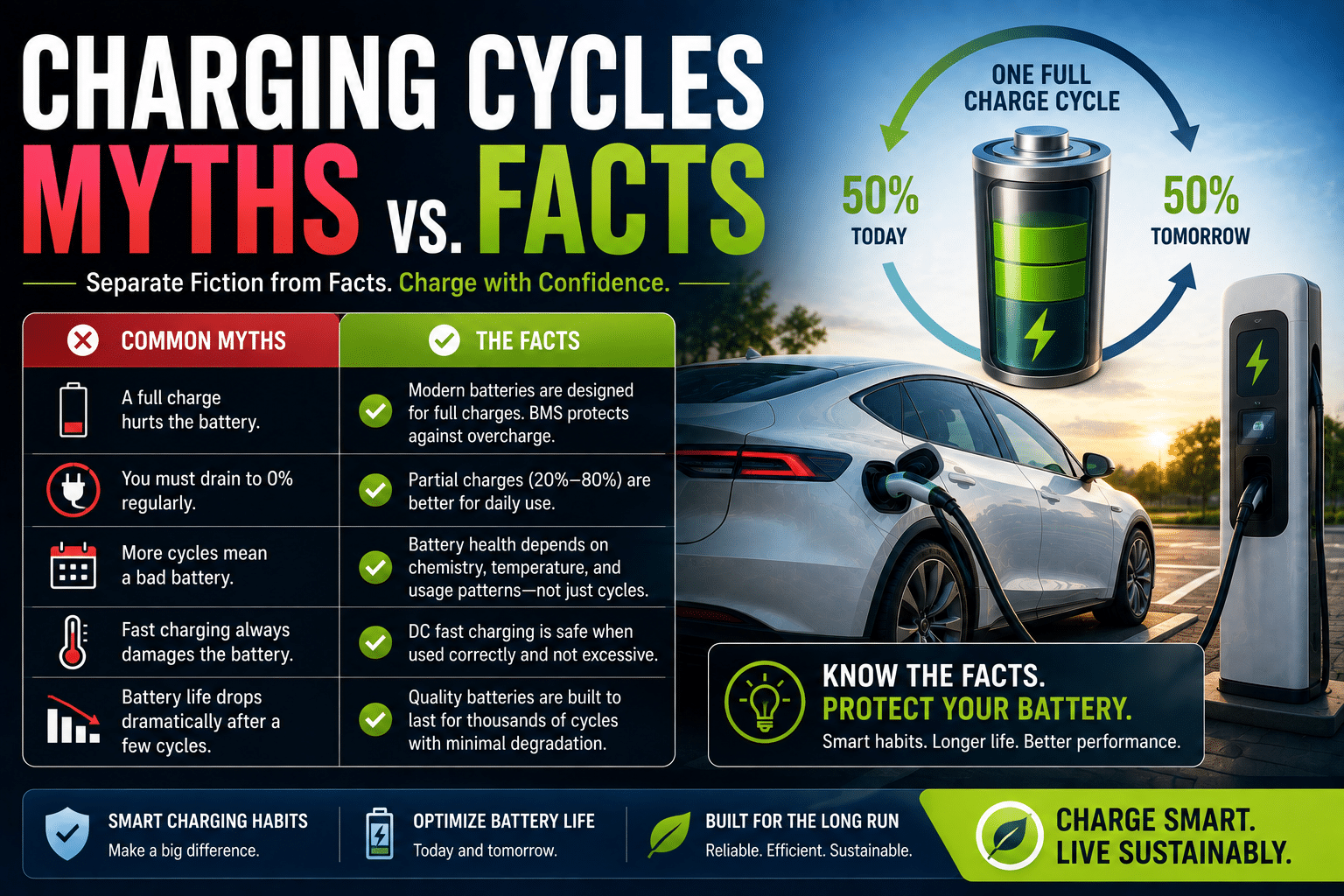
A charging cycle is a full discharge followed by a full charge. For example, if a battery is fully charged and then completely discharged, that counts as one cycle. However, if a battery is discharged to 50%, charged back to 100%, and then discharged to 50% again, that also counts as one cycle. Charging cycles are crucial because they determine the lifespan of a battery, with most batteries designed to last for a certain number of cycles before their capacity starts to degrade significantly.
Core Charging Approaches
1. Deep Discharge vs. Shallow Discharge
There are two main approaches to charging and discharging batteries: deep discharge and shallow discharge. Deep discharge involves letting the battery drain to very low levels before recharging, while shallow discharge involves keeping the battery level between certain percentages, usually between 20% and 80%, to minimize stress on the battery. This approach is particularly relevant for devices that are used intermittently and can be charged regularly.
- What You Gain:
- Extended battery lifespan through reduced oxidative stress and chemical degradation.
- Less heat generated during charging, potentially increasing overall device longevity.
- Known Issues:
- May not be practical for all use cases, especially for devices that need to be used for extended periods without access to a charger.
- Requires consistent charging habits, which can be difficult to maintain, especially in situations where the device is forgotten or left unused for extended periods.
2. Fast Charging vs. Slow Charging
Another aspect of charging cycles is the speed at which a battery is charged. Fast charging technology has become increasingly popular, allowing devices to charge up to 80% in under 30 minutes. However, there’s a debate on whether fast charging affects the lifespan of a battery. Slow charging, on the other hand, involves charging the battery at a slower rate, which some argue is better for battery health.
- What You Gain:
- Convenience and speed, especially in emergency situations where time is of the essence.
- Potentially less risk of battery overheating if the fast charging technology is designed with thermal management in mind.
- Known Issues:
- Potential for increased heat generation, which can accelerate chemical reactions within the battery and lead to a faster degradation of battery capacity over time.
- May cause more stress on the battery than slow charging, although the difference can be minimal with modern battery technologies.
| Charging Method | Impact on Battery Life | Practicality |
|---|---|---|
| Deep Discharge | Negative, if frequent | Low for daily use |
| Shallow Discharge | Positive | High, with consistent charging habits |
| Fast Charging | Neutral to Negative | High for emergency situations |
| Slow Charging | Positive | Low for urgent needs |
The Impact on Consumers
The myths and realities surrounding charging cycles have significant implications for consumers. Understanding these can help in making informed decisions about how to use and maintain devices to extend their lifespan.
✔ Better Battery Care
By following best practices such as avoiding deep discharges when possible and keeping devices away from high temperatures, consumers can significantly extend the life of their batteries.
✔ Cost Savings
Prolonging the life of a device’s battery means less frequent replacements, which can save money in the long run, especially for devices where battery replacement is costly or complicated.
✔ Environmental Benefits
Extending the life of electronic devices and their components, such as batteries, contributes to reducing electronic waste and the environmental impact associated with the production and disposal of these devices.
✔ Improved Performance
A well-maintained battery performs better over time, ensuring that devices operate at their optimal levels without significant slowdowns due to battery degradation.
✔ Enhanced User Experience
Understanding and managing charging cycles effectively can lead to a better user experience, with devices being more reliable and less prone to sudden shutdowns or performance issues.
✔ Reduced Need for Frequent Upgrades
By extending the useful life of their devices through proper battery care, consumers may find they need to upgrade their devices less frequently, which can be both cost-effective and environmentally friendly.
Looking Ahead
- Advancements in battery technology are expected to lead to batteries that can handle more charging cycles without significant degradation.
- Improved charging standards and technologies, such as wireless charging and fast charging, will continue to evolve, offering more convenience and potentially better battery health.
- There will be a greater focus on sustainable and eco-friendly practices in electronics, including the development of more recyclable batteries and devices designed with longevity in mind.
- Consumer education on proper battery care and charging practices will become more widespread, leading to better device maintenance and potentially longer lifespans for electronics.
- The development of smart charging solutions that automatically optimize charging patterns for battery health will become more prevalent.
- Research into new battery materials and designs, such as solid-state batteries, will continue, promising even more efficient, safer, and longer-lasting power solutions.
One Last Thing
Charging cycles and their effects on battery life are multifaceted, influenced by how devices are used and maintained. By debunking common myths and understanding the best practices for charging, consumers can take significant steps towards extending the life of their devices and improving their overall user experience. As technology continues to evolve, so too will our understanding of how to best care for our devices, paving the way for more sustainable and efficient use of electronics.