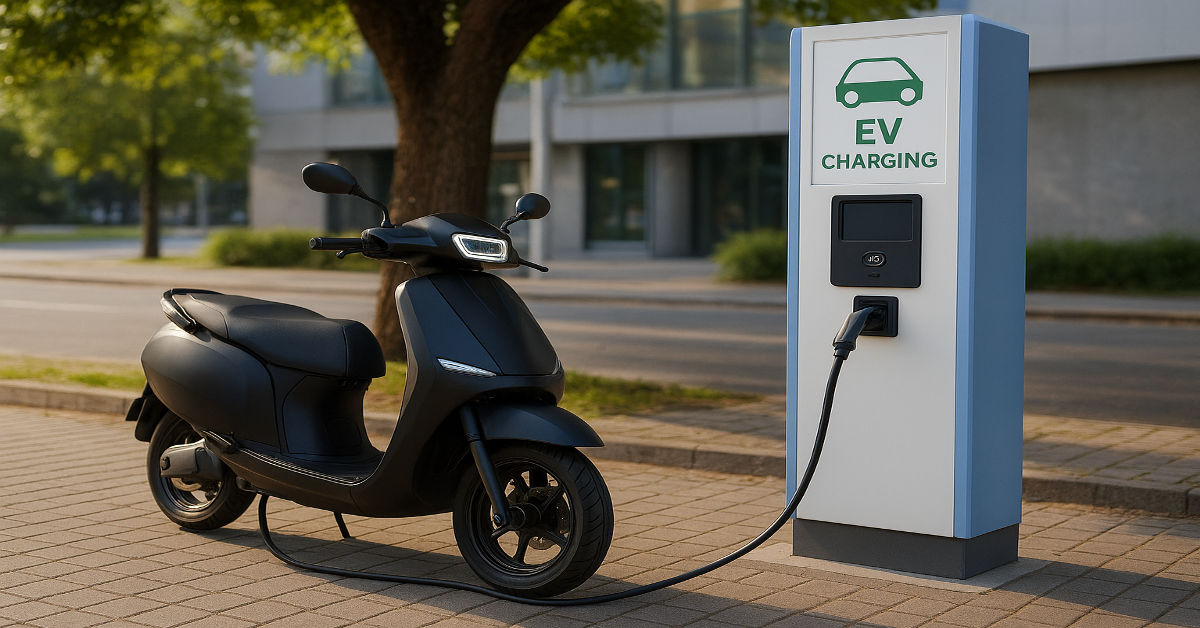
Public EV Bike Charging Costs Explained revolution has reached two-wheelers, transforming how people commute in cities and towns. Electric bikes are no longer futuristic; they are becoming a common sight on Indian roads and across the world. However, one common question still lingers among EV owners and potential buyers: “How much does it really cost to charge an EV bike at public charging stations?”
This article will explain public EV bike charging costs, explore factors affecting pricing, compare home and public charging, and provide practical tips to help you reduce your expenses and extend your EV’s battery life.
Understanding EV Bike Charging Basics
Before we discuss the cost, it’s important to understand how EV charging works. Electric bikes store energy in rechargeable lithium-ion batteries, which are charged using electricity from a power source. The charging can be done either at home or at a public EV charging station.
Public charging stations are equipped with AC (Alternating Current) or DC (Direct Current) chargers. While AC chargers take longer to charge, DC fast chargers can top up a bike battery in less than an hour.
| Charging Type | Charging Speed | Typical Charging Time for EV Bike | Approximate Cost per kWh (India) | Usage Type |
|---|---|---|---|---|
| AC Slow Charger | 1–2 kW | 4–6 hours | ₹6–₹8 per kWh | Home/Public |
| DC Fast Charger | 10–30 kW | 30–60 minutes | ₹10–₹25 per kWh | Public Only |
From this table, you can see that DC fast chargers are more expensive but provide much faster charging — ideal for riders on the go.
What Determines the Cost of Public EV Bike Charging?
The cost of charging your EV bike publicly depends on several key factors. Each charging network or operator sets its own rates based on a combination of the following:
a. Electricity Tariffs
Electricity prices vary from one region to another. Urban centers usually have slightly higher rates due to infrastructure costs, while rural areas may have lower tariffs.
b. Type of Charger
Fast chargers require heavy-duty equipment and more power, which leads to higher costs compared to standard AC chargers.
c. Time of Charging (Peak vs. Off-Peak)
Some public stations use time-based pricing. Charging during peak hours (daytime or evening) might cost more than during off-peak hours (late night or early morning).
d. Service and Maintenance Charges
Public stations include additional costs like maintenance, staff wages, rent, and operational expenses, which get passed on to users.
e. Subscription or Membership Plans
Some companies offer subscription-based charging plans that reduce per-unit costs for frequent users. Others charge a pay-as-you-go rate.
Average Public Charging Cost for EV Bikes
The typical public EV bike charging cost in India ranges between ₹15 to ₹30 per full charge, depending on the location, charger type, and electricity rate.
Here’s a breakdown for better understanding:
| EV Bike Model | Battery Capacity (kWh) | Average Range (km) | Cost per Full Charge (Public Station) | Cost per km |
|---|---|---|---|---|
| Ather 450X | 3.7 kWh | 150 km | ₹25–₹30 | ₹0.18–₹0.20 |
| TVS iQube | 3.04 kWh | 100 km | ₹20–₹25 | ₹0.20–₹0.25 |
| Ola S1 Pro | 4 kWh | 181 km | ₹25–₹35 | ₹0.18–₹0.22 |
| Bajaj Chetak | 3 kWh | 108 km | ₹18–₹25 | ₹0.19–₹0.23 |
From the table, it’s clear that even at public charging rates, EV bikes are significantly cheaper to run than petrol scooters, which cost around ₹1.5–₹2.0 per km.
Home Charging vs. Public Charging
One of the biggest decisions EV owners face is whether to rely more on home charging or public charging. Each option has advantages and trade-offs.
| Factor | Home Charging | Public Charging |
|---|---|---|
| Cost per kWh | ₹6–₹8 | ₹10–₹25 |
| Convenience | High (charge anytime) | Moderate (depends on availability) |
| Charging Speed | 4–6 hours | 30–60 minutes |
| Setup Cost | ₹2,000–₹10,000 (charger installation) | None (pay per use) |
| Accessibility | At home only | Available at malls, highways, offices |
Verdict:
If you have parking space and access to power, home charging is cheaper and more convenient. However, public stations are excellent for long rides, emergencies, and apartment dwellers who lack dedicated parking.
Regional Public EV Charging Costs
Different regions and cities in India or abroad have their own EV charging rate structures. Let’s look at some average public charging costs by region (as of 2025):
| Region/City | AC Charger Rate (₹/kWh) | DC Fast Charger Rate (₹/kWh) | Network Operators |
|---|---|---|---|
| Delhi | ₹10–₹15 | ₹20–₹25 | Tata Power, Statiq, EV Motors |
| Mumbai | ₹12–₹16 | ₹22–₹28 | Fortum, Magenta, Tata Power |
| Bengaluru | ₹8–₹12 | ₹18–₹24 | Ather Grid, Zeon Charging |
| Chennai | ₹7–₹10 | ₹15–₹22 | Relux, ChargeGrid, BPCL |
| Hyderabad | ₹9–₹13 | ₹17–₹25 | Statiq, ChargeZone, Volttic |
These rates may vary slightly depending on the provider and charging infrastructure cost.
How to Calculate Your EV Bike Charging Cost
It’s easy to estimate your charging expenses. Use this simple formula:
Charging Cost = Battery Capacity (kWh) × Price per kWh
Example:
If your EV bike has a 4 kWh battery and the public station rate is ₹20 per kWh, then:
4 kWh × ₹20 = ₹80 per full charge
If your EV gives a range of 150 km per charge, your running cost per km is:
₹80 ÷ 150 = ₹0.53 per km
Even with public charging, that’s much cheaper than petrol, which costs over ₹2 per km.
Government Policies Influencing Public Charging Prices
Governments across the world are introducing EV-friendly policies to encourage adoption. In India, several schemes are making public EV charging more affordable:
-
FAME-II (Faster Adoption and Manufacturing of Hybrid and Electric Vehicles):
Subsidizes charging infrastructure setup and reduces installation cost for public stations. -
GST Reduction:
EVs and their charging services attract lower GST rates compared to fuel. -
State-Level Incentives:
States like Delhi, Tamil Nadu, and Maharashtra offer reduced electricity tariffs for EV charging operators.
These policies indirectly reduce the final charging price for consumers, promoting a faster transition toward clean mobility.
Comparing Public Charging Costs with Petrol Expenses
Let’s compare the cost of running an EV bike and a petrol scooter over 1,000 km:
| Type of Vehicle | Fuel/Energy Cost per Unit | Average Mileage/Range per Unit | Cost for 1,000 km |
|---|---|---|---|
| Petrol Scooter | ₹105 per litre | 45 km/litre | ₹2,333 |
| EV Bike (Public Charge) | ₹20 per kWh | 40 km/kWh | ₹500 |
| EV Bike (Home Charge) | ₹8 per kWh | 40 km/kWh | ₹200 |
Even if you rely completely on public chargers, you’ll save nearly ₹1,800 per 1,000 km, a huge difference for daily commuters.
Factors That Can Increase or Decrease Charging Costs
Several habits and environmental conditions can impact how much you spend on charging:
-
Driving Speed: Higher speeds drain batteries faster.
-
Battery Health: Old batteries charge inefficiently, consuming more electricity.
-
Weather: Hot or cold temperatures affect energy consumption.
-
Frequent Fast Charging: Using DC chargers too often can shorten battery life.
-
Load on the Vehicle: Carrying extra weight or a pillion rider reduces range.
Practicing efficient riding can stretch your per-charge range and lower your expenses.
Tips to Reduce EV Bike Charging Costs
Here are some smart tips to save more on your EV bike’s charging:
-
Use Home Charging Whenever Possible:
It’s cheaper and more energy-efficient. -
Charge During Off-Peak Hours:
Some stations offer discounted rates late at night. -
Monitor Battery Health:
Regular maintenance ensures optimal performance and charging efficiency. -
Join Subscription Plans:
Charging networks often provide monthly packages with reduced rates. -
Avoid Overcharging:
Unplug your bike once it reaches full charge to preserve battery health. -
Use Mobile Apps:
Apps like Ather Grid, Statiq, and Tata Power EZ Charge help locate affordable stations nearby.
Real-World Example: A Day in the Life of an EV Commuter
Let’s take an example of Ravi, an office employee in Bengaluru who rides an Ather 450X.
-
Daily Commute: 25 km (to and fro)
-
Charging Frequency: Twice a week (full charge)
-
Charging Mode: Public (Ather Grid)
-
Charging Cost per Session: ₹25
His weekly cost = ₹50, and monthly cost = ₹200.
If he had used a petrol scooter (₹2 per km for 25 km × 26 days = ₹1,300/month), he saves around ₹1,100 every month, amounting to ₹13,200 annually.
Future of Public EV Charging Costs
With more EV adoption, the cost of public charging is expected to decrease further due to competition and technological advancements. Here’s how the future looks:
| Trend | Impact on Cost |
|---|---|
| Increased EV adoption | Lower prices through bulk energy purchasing |
| Renewable energy integration | Cleaner and cheaper electricity sources |
| Government incentives | Reduced setup and maintenance costs |
| Battery swapping stations | Alternative low-cost charging options |
As India moves toward a net-zero emission goal, expect charging rates to stabilize and become more affordable across regions.
Are Public EV Bike Charging Stations Profitable for Operators?
Many wonder how public charging stations sustain themselves. The business model usually includes:
-
Charging fees per kWh
-
Parking fees in commercial areas
-
Advertising and partnerships with EV brands
-
Government subsidies and tax benefits
Most operators report moderate profits due to growing demand, especially in metropolitan areas.
Common Misconceptions About Public EV Charging Costs
Let’s clear up a few myths:
-
Myth 1: Public charging is always expensive.
Reality: Many slow-charging points cost nearly the same as home charging. -
Myth 2: Fast charging damages the battery.
Reality: Modern bikes have Battery Management Systems (BMS) that regulate charging safely. -
Myth 3: Public charging takes too long.
Reality: DC chargers can charge most EV bikes in less than an hour.
Environmental and Economic Benefits
Every rupee spent on charging instead of fuel not only saves you money but also benefits the planet. By choosing EVs, riders:
-
Reduce carbon emissions
-
Lower noise pollution
-
Contribute to energy independence
-
Encourage clean energy infrastructure
EV bikes also create new job opportunities in battery manufacturing, maintenance, and charging infrastructure. EV bike charging costs don’t include oil changes or engine maintenance.
Conclusion: Understanding the Real Value of Public EV Bike Charging
Public EV bike charging costs may vary, but they are consistently cheaper than petrol expenses, even when using fast chargers. The convenience, environmental benefits, and lower running costs make EV bikes a wise investment for the future. EV bike charging costs are much lower than petrol expenses.
As technology advances and infrastructure expands, public charging stations will become more affordable, faster, and accessible, encouraging millions more to switch to electric mobility. Charging at home keeps EV bike charging costs to a minimum.
So, whether you’re an EV owner or planning to buy one, understanding how public EV bike charging costs work helps you ride smarter, save more, and contribute to a cleaner tomorrow. Public stations may raise EV bike charging costs, but still beat petrol prices.