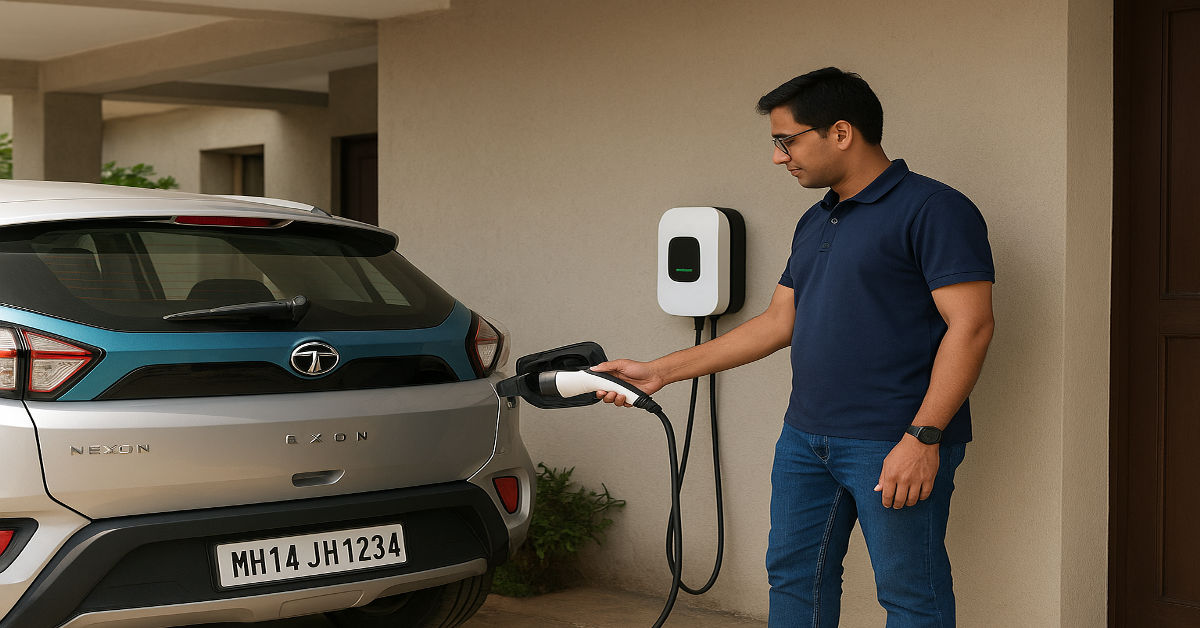
Introduction: Powering the Future of Electric Mobility at Home
EV Home Charger Installation in India are transforming the way India drives. With government incentives, increasing fuel costs, and a growing charging infrastructure, EV adoption is on the rise. However, one of the most critical aspects of EV ownership is home charging — a convenient, safe, and cost-effective way to keep your electric vehicle ready for the road. A proper EV home charger installation adds value to your home.
This article provides a complete guide to EV home charger installation in India, explaining the installation process, costs, requirements, safety tips, and government guidelines for 2025. Whether you own a Tata Nexon EV, MG ZS EV, BYD Atto 3, or any other electric vehicle, this guide will help you make informed decisions about installing your EV charger at home. EV home charger installation works with any electric car using standard connectors.
Understanding EV Home Charging in India
Before installing an EV charger, it’s essential to understand the different types of EV charging and how home charging fits into India’s ecosystem.
Types of EV Charging Levels
| Charging Level | Power Output | Charging Speed | Suitable For |
|---|---|---|---|
| Level 1 (Slow) | 2–3 kW (Single Phase) | 8–12 hours for full charge | 2W/3W or plug-in hybrid cars |
| Level 2 (Fast AC) | 7–22 kW | 3–5 hours for full charge | Personal EVs (most home chargers) |
| Level 3 (DC Fast) | 50–150 kW | 30–60 minutes for 80% charge | Public charging stations only |
Most Indian homes use Level 2 AC chargers, as they balance speed, affordability, and safety.
Why Install a Home EV Charger in India?
Charging your EV at home is one of the most practical and economical ways to maintain your vehicle. Here’s why it’s becoming the preferred option for Indian EV owners:
-
Convenience: Plug in your car overnight and wake up to a full battery every morning.
-
Cost Efficiency: Home electricity rates are cheaper than public charging stations.
-
Safety: Professionally installed home chargers ensure proper wiring and safety compliance.
-
Battery Health: Consistent home charging helps maintain optimal battery performance.
-
Government Incentives: Subsidies and rebates in some Indian states make installation affordable.
Steps to Install an EV Charger at Home
Installing an EV charger at home involves several steps. Here’s a detailed breakdown to help you plan efficiently.
Assess Your Electrical Setup
Start by assessing your home’s existing electrical capacity. Most Indian households use single-phase connections (230V), but high-powered chargers may require three-phase power (415V).
Your electrician will check:
-
Main circuit load capacity
-
Available power supply
-
Condition of existing wiring and circuit breaker
-
Earthing and grounding setup
Choose the Right Charger
There are multiple brands in India offering home EV chargers compatible with popular vehicles.
| Brand | Model | Power Output | Approx. Cost (INR) |
|---|---|---|---|
| Tata Power EZ Charge | AC Type 2 | 7.4 kW | ₹55,000–₹70,000 |
| Ather Grid | Wall Connector | 3.3 kW | ₹35,000–₹50,000 |
| ABB Terra AC | 7.4–22 kW | ₹80,000–₹1,20,000 | |
| Delta AC Mini Plus | 7.4 kW | ₹60,000–₹85,000 | |
| Exicom | AC Charger | 7.4–22 kW | ₹55,000–₹90,000 |
When selecting a charger, ensure compatibility with your car’s connector type (Type 1 or Type 2). Most EVs in India now use Type 2 connectors.
Hire a Certified Installer
Always hire a certified electrician or authorized EV charger installer to handle installation. Reputed brands like Tata Power EZ Charge and Fortum Charge & Drive provide end-to-end installation services, including site inspection and setup.
Installation Process
The typical installation process includes:
-
Site inspection and wiring layout design
-
Circuit protection setup (MCB, RCCB, etc.)
-
Charger mounting and connection to the main supply
-
Software/app configuration for smart chargers
-
Testing for safe operation
Inspection and Safety Testing
Before use, the installer conducts a load test and safety inspection, ensuring proper grounding, circuit integrity, and overcurrent protection.
Space and Power Requirements
Before installing, make sure you have adequate space and power availability.
| Requirement | Description |
|---|---|
| Space | 1–1.5 square meters for charger mounting and cable reach |
| Power Supply | Single-phase (230V) or three-phase (415V) |
| Wiring | Copper wiring with 4–6 sq mm cross-section |
| Circuit Breaker | MCB + RCCB for safety |
| Internet Access | For smart charger connectivity (Wi-Fi or SIM) |
EV Charger Installation Cost in India (2025)
The total cost depends on several factors, including charger type, power capacity, wiring, and installation complexity.
| Component | Estimated Cost (INR) |
|---|---|
| Charger Unit | ₹35,000–₹1,20,000 |
| Installation & Wiring | ₹10,000–₹25,000 |
| Circuit Breakers & Accessories | ₹3,000–₹8,000 |
| Earthing Setup | ₹1,500–₹5,000 |
| Total Estimated Cost | ₹50,000–₹1,50,000 |
While these prices may vary based on location and electrical layout, many EV manufacturers in India offer discounted installation packages with new car purchases.
Government Guidelines and Subsidies
The Government of India, through FAME-II (Faster Adoption and Manufacturing of Hybrid and Electric Vehicles), supports EV infrastructure development, including home charging. EV home charger installation should always be done by a licensed professional.
Key points to note:
-
No special license required for private home charger installation.
-
The Bureau of Indian Standards (BIS) regulates safety requirements under IS 17017.
-
State DISCOMs (electricity boards) offer rebates for residential EV charging.
-
Some states like Delhi, Maharashtra, and Tamil Nadu offer subsidies up to ₹6,000–₹10,000 for home charger installation.
How Long Does It Take to Charge at Home?
Charging time varies depending on battery size and charger capacity.
| EV Model | Battery Capacity (kWh) | Charger Power (kW) | Charging Time (Full Charge) |
|---|---|---|---|
| Tata Nexon EV | 40.5 | 7.4 | 6–7 hours |
| MG ZS EV | 50.3 | 7.4 | 7–8 hours |
| Hyundai Kona Electric | 39.2 | 7.2 | 6–7 hours |
| BYD Atto 3 | 60.5 | 7.4 | 8–9 hours |
| Tata Tiago EV | 24 | 3.3 | 6–7 hours |
Smart Charging Features for Indian Homes
Modern EV chargers offer smart connectivity, allowing owners to monitor and control charging from mobile apps.
Key Smart Features Include:
-
Remote start/stop through mobile apps
-
Energy consumption tracking
-
Scheduled charging during off-peak hours
-
Load management to avoid power overloads
-
Integration with solar panels for green energy
These features not only enhance convenience but also reduce electricity bills.
Safety Tips for EV Charger Installation
Installing an EV charger involves high-voltage connections, so safety should always come first.
Safety Checklist:
-
Use only IS-certified chargers.
-
Ensure proper earthing and surge protection.
-
Avoid using extension cords or local adapters.
-
Do not expose chargers to direct rain or sunlight.
-
Regularly inspect cables and connectors for wear.
-
Install a fire-rated circuit breaker near the charger.
Read more:
EV Charger Maintenance and Troubleshooting
To ensure smooth operation and long life of your EV charger, follow routine maintenance practices.
| Maintenance Task | Frequency | Purpose |
|---|---|---|
| Visual inspection of cables | Monthly | Detect wear or damage |
| Cleaning dust or debris | Monthly | Prevent overheating |
| Software/firmware updates | Quarterly | Maintain smart features |
| Load testing by technician | Yearly | Ensure safe operation |
If you notice any unusual heating, error codes, or charging interruptions, immediately stop usage and contact a certified technician. EV home charger installation near your parking spot saves extension cords.
Top EV Charger Providers in India (2026)
| Provider | Service Offering | Coverage |
|---|---|---|
| Tata Power EZ Charge | End-to-end home installation | Pan-India |
| Ather Energy | Wall-mounted chargers | Major metros |
| Exicom Power | Residential and commercial setups | 50+ cities |
| Delta Electronics | Smart charging solutions | Nationwide |
| Magenta ChargeGrid | Home and workplace chargers | 30+ cities |
These companies provide professional installation, after-sales support, and warranty coverage ranging from 12 to 36 months.
Integration with Solar Energy
As renewable energy adoption grows, many EV owners in India are integrating solar panels with their EV chargers. EV home charger installation prevents battery stress from frequent fast charging.
Benefits include:
-
Zero-emission charging using solar power
-
Lower monthly electricity bills
-
Long-term sustainability
A 5kW rooftop solar system can generate enough power to charge an EV daily, depending on sunlight and battery capacity.
EV Home Charger Installation for Apartments and Societies
In India’s urban environment, many EV owners live in apartments or gated communities. Installing a charger in such setups requires permission from the Resident Welfare Association (RWA) or building management.
Steps include:
-
Submit a written request with vehicle and charger details.
-
Coordinate with the state electricity board for a separate meter if required.
-
Install the charger in your allocated parking area.
-
Use certified installers to ensure compliance with fire and electrical safety rules.
The Ministry of Housing and Urban Affairs has directed developers to include EV charging infrastructure in new residential complexes, simplifying future installations. EV home charger installation includes cable management for neat setup.
Common Myths About Home EV Charging
-
Myth: Home chargers are very expensive.
Fact: With subsidies, many chargers cost under ₹50,000. -
Myth: Regular wall sockets are enough.
Fact: Standard 15A sockets are slow and unsafe for long-term use. -
Myth: Installation requires major wiring changes.
Fact: Most homes can install a 7.4 kW charger with minimal upgrades. -
Myth: Charging overnight damages the battery.
Fact: Modern EVs have smart Battery Management Systems that prevent overcharging.
Future of Home EV Charging in India
India’s EV ecosystem is rapidly expanding. With over 2 million EVs on the road by 2026, home charging will become the backbone of sustainable mobility.
Trends to watch:
-
Smart grid integration for dynamic load management
-
Vehicle-to-Home (V2H) technology enabling reverse charging
-
AI-based energy optimization for real-time cost control
-
Government standardization for plug and safety norms
The government’s push toward net-zero emissions by 2070 ensures that home charging will remain central to India’s green transition. EV home charger installation reduces range anxiety from day one.
Conclusion: Empower Your Drive with a Home EV Charger
Installing an EV home charger in India is more than just a convenience — it’s an investment in the future of sustainable mobility. It offers cost efficiency, safety, and convenience, helping EV owners charge their vehicles reliably every day. EV home charger installation lets you charge your car overnight like a phone. EV home charger installation is cheaper than relying only on public chargers.
Whether you own an electric car or are planning to buy one, a home charging station is a smart step toward energy independence and environmental responsibility. By choosing certified installers, following BIS safety standards, and exploring government incentives, you can make your EV ownership experience seamless and rewarding. Always check your home’s electrical panel before EV home charger installation.