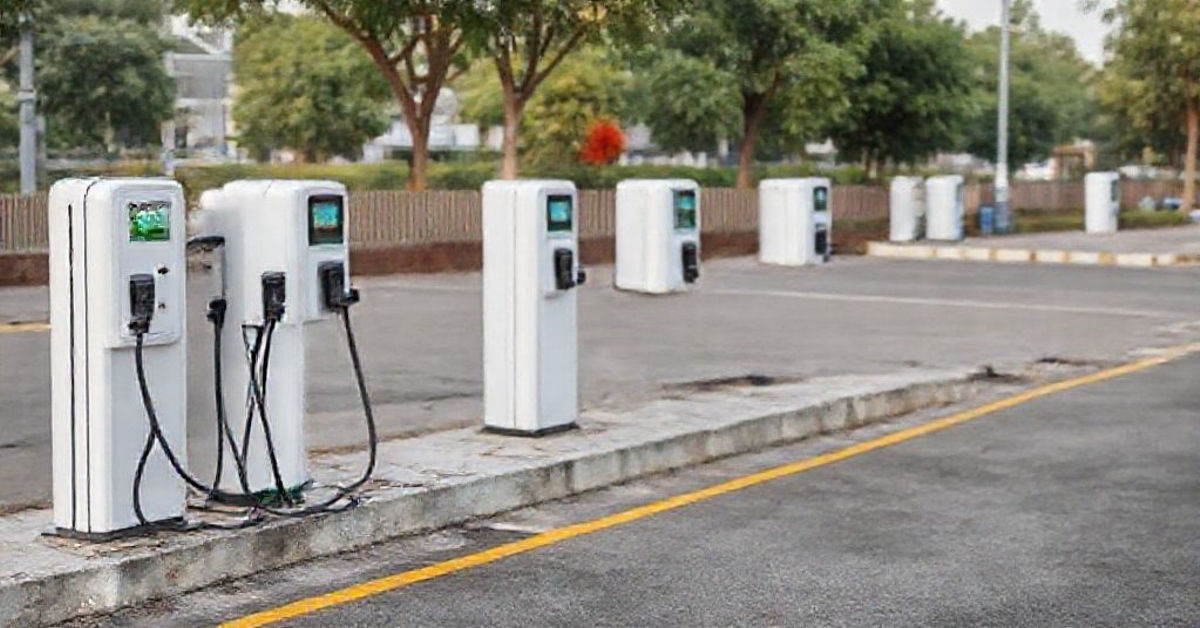
Electric Vehicles (EVs) are transforming the way India moves. With rising fuel prices and growing environmental concerns, more people are switching from petrol or diesel vehicles to EVs. But the biggest question every EV owner has is — “Where can I charge my vehicle?” This is where public EV charging stations come into play.
If you’ve ever searched “Public EV Charging Stations Near Me in India”, this detailed guide will help you understand everything — from finding nearby charging points to knowing the costs, types, and future developments of India’s EV charging infrastructure.
Understanding the Growth of EV Charging in India
India’s EV sector has seen tremendous growth in recent years. According to government and industry data, there are now over 26,000+ public charging stations across the country as of 2025, compared to just a few thousand in 2020.
The government aims to build a strong charging network that supports both two-wheelers and four-wheelers, ensuring easy access across urban and rural regions.
Growth of Public EV Charging Stations in India
| Year | Approximate Number of Public Chargers | Growth Percentage |
|---|---|---|
| 2020 | 1,500+ | — |
| 2022 | 10,000+ | 566% increase |
| 2024 | 20,000+ | 100% increase |
| 2025 | 26,000+ | 30% increase |
This rapid growth is driven by both government initiatives and private companies entering the EV infrastructure sector. As a result, EV owners in India can now find charging stations in almost every major city and along key highways.
Why Public EV Charging Stations Are Important
Public EV charging stations are critical for India’s green mobility revolution. They offer the convenience of recharging your EV batteries when you are on the go — especially for those who don’t have a home charging facility.
Here’s why they are essential:
-
Overcoming Range Anxiety: EV drivers often worry about running out of charge during long trips. Public charging stations solve this issue.
-
Supporting Commercial EV Use: Many cab fleets, delivery services, and logistics companies depend on public chargers for daily operations.
-
Promoting EV Adoption: The more visible and accessible charging points become, the more confidence consumers gain in switching to EVs.
-
Sustainable Urban Development: Public chargers help cities reduce air pollution and dependence on fossil fuels.
Types of Public EV Charging Stations in India
Different types of chargers cater to different vehicle needs. Let’s explore the main categories of EV chargers available across India.
Types of EV Chargers and Their Characteristics
| Charger Type | Charging Power | Charging Time | Suitable For | Example Usage |
|---|---|---|---|---|
| AC Slow Charger | 3.3 kW to 22 kW | 6–8 hours | Home or workplace | Overnight charging |
| DC Fast Charger | 30 kW to 120 kW | 30–60 minutes | Public stations | Highway and fleet stations |
| Ultra-Fast Charger | 150 kW+ | 15–30 minutes | Long-distance EVs | Premium and commercial EVs |
AC slow chargers are ideal for home use, but public EV charging stations usually deploy DC fast chargers to help drivers recharge in less time.
How to Find Public EV Charging Stations Near You
If you’re wondering, “How can I find EV charging stations near me?”, the process is easier than you might think. Several apps and platforms allow you to locate the nearest charging point with just a few clicks.
1. Use Google Maps
Google Maps now integrates EV charging station data across India. Simply type “EV charging station near me” and it will display a list of nearby locations, their distances, reviews, and sometimes the charger type.
2. Use Dedicated EV Apps
Popular apps such as Tata Power EZ Charge, Ather Grid, PlugShare, ChargeZone, Statiq, and Pulse Energy show live information like:
-
Charging port availability
-
Charging speed (AC/DC)
-
Payment methods
-
Real-time user ratings
3. Use Vehicle-Specific Apps
If you own a Tata Nexon EV, MG ZS EV, or BYD Atto 3, their companion mobile apps can guide you to compatible charging points integrated into their ecosystem.
4. Highway Charging Hubs
India’s national highways are being equipped with fast chargers every 50–100 km. You can find these hubs in petrol stations, rest stops, and restaurants along major routes.
Popular EV Charging Networks in India
| Charging Network | Coverage Cities | App/Website | Charger Type |
|---|---|---|---|
| Tata Power EZ Charge | 450+ cities | ezcharge.tatapower.com | AC & DC |
| Ather Grid | 100+ cities | atherenergy.com/grid | Fast |
| Statiq | 60+ cities | statiq.in | AC & DC |
| ChargeZone | 30+ cities | chargezone.com | DC Fast |
| Jio-BP Pulse | 20+ cities | jiobppulse.com | Fast |
Top Locations with Public EV Charging Stations in India
1. Delhi NCR
Delhi leads in the number of public EV chargers in India. You can find them in shopping malls, metro stations, public parking areas, and petrol pumps.
Popular charging points include:
-
Connaught Place – Tata Power EZ
-
Saket Mall – Statiq Charger
-
Indraprastha Metro Station – BSES Public Charging Hub
2. Mumbai & Pune (Maharashtra)
Maharashtra is among the top states for EV adoption. Major locations include:
-
Mumbai Western Express Highway – Jio-BP Pulse Station
-
Pune Airport – Tata Power Charging Hub
-
Navi Mumbai – Statiq Multi-Port Charger
3. Bengaluru (Karnataka)
Known as India’s tech hub, Bengaluru has a dense EV charging network.
-
MG Road – Ather Grid
-
Whitefield – Statiq Fast Charging
-
Electronic City – Tata Power EZ Station
4. Chennai (Tamil Nadu)
The Tamil Nadu government actively promotes EV adoption.
Popular chargers:
-
T Nagar – Ather Grid
-
OMR (Old Mahabalipuram Road) – Zeon Fast Charging
-
Chennai Airport – Tata Power DC Charger
5. Hyderabad (Telangana)
-
Gachibowli – Statiq Charger
-
Banjara Hills – Tata Power
-
Madhapur – Jio-BP Pulse
These metro cities are expanding their EV infrastructure quickly, ensuring users can always find a nearby charging point.
How Much Does It Cost to Charge an EV Publicly in India?
The cost of charging an EV in public depends on multiple factors such as the charger type, electricity tariff, and network provider.
Approximate Cost of EV Charging in India (2025)
| Charger Type | Average Cost (Per kWh) | Estimated Cost for 30 kWh (Car Battery) |
|---|---|---|
| AC Slow Charger | ₹10–₹12 | ₹300–₹360 |
| DC Fast Charger | ₹18–₹24 | ₹540–₹720 |
| Ultra-Fast Charger | ₹25–₹30 | ₹750–₹900 |
Note: Prices may vary slightly based on city and operator. Some networks also charge a service or parking fee.
Benefits of Public EV Charging Stations
Public charging stations offer several benefits that go beyond convenience.
-
Reduces Range Anxiety – Knowing that you can charge on the go gives you confidence for longer drives.
-
Supports Sustainability – Public EV chargers often use renewable energy sources such as solar panels.
-
Increases Property Value – Malls and offices with EV chargers attract more customers.
-
Encourages Tourism – Highway chargers make intercity EV travel more practical.
-
Boosts the EV Ecosystem – Helps in faster EV adoption by both private and commercial users.
Challenges in Finding Public EV Charging Stations in India
While the charging network is improving rapidly, challenges still exist:
-
Uneven Distribution: Major cities have sufficient chargers, but small towns and highways still lag.
-
Charger Downtime: Some public chargers are often offline or under maintenance.
-
Payment Issues: Multiple apps and inconsistent payment systems can cause inconvenience.
-
Compatibility Problems: Not all EVs use the same connector type.
-
Limited Parking Space: Many charging spots are occupied by non-EV vehicles.
Common EV Charging Issues and Possible Solutions
| Challenge | Description | Solution |
|---|---|---|
| Charger not working | Technical error or maintenance delay | Report via app, use backup station |
| Slow charging | Low power supply | Prefer DC fast chargers |
| Payment failure | App or QR issue | Carry multiple payment options |
| No space | ICE cars blocking | Use stations with dedicated EV zones |
Government Initiatives Supporting EV Charging Expansion
The Government of India has launched several schemes and policies to promote EV charging networks:
-
FAME II (Faster Adoption and Manufacturing of Electric Vehicles): Provides financial incentives for setting up charging infrastructure.
-
Battery Swapping Policy: Encourages stations where EV owners can swap batteries in minutes.
-
PM E-Drive Scheme (2025): Focuses on building one charging station every 3 km in cities and every 25 km along highways.
-
State EV Policies: Tamil Nadu, Maharashtra, Karnataka, and Delhi have their own EV-friendly policies providing subsidies for setting up stations.
Safety Tips When Using Public EV Charging Stations
Charging your EV safely is just as important as finding the right station.
-
Always use the official charging cable provided by your manufacturer.
-
Avoid using damaged or loose connectors.
-
Do not leave the charger unattended for long periods.
-
Ensure your EV is parked properly and the charger is grounded.
-
Keep your mobile app notifications on to monitor the session.
-
Disconnect carefully once charging is complete to prevent sparks or short circuits.
The Future of Public EV Charging in India
India is on a mission to become one of the world’s largest EV markets. Analysts predict that by 2030, the country will need 1.3 million public EV charging stations to meet demand.
Future trends include:
-
Solar-Powered Chargers: Reducing grid dependency.
-
Smart Charging: Using IoT for real-time monitoring.
-
Wireless Charging Pads: For effortless plug-free charging.
-
EV Charging at Every Petrol Pump: As per government directives, all new petrol stations must include an EV charger.
-
Ultra-Fast Highway Corridors: To enable Delhi-Mumbai, Chennai-Bengaluru, and Kolkata-Guwahati EV travel without range anxiety.
Expert Insights for EV Owners
Here are some practical tips from EV experts to make the most of public chargers:
-
Plan Your Route: Before long trips, use apps to mark chargers on your route.
-
Avoid Peak Hours: Charging early morning or late night often ensures availability.
-
Join EV Communities: Online forums can help you discover hidden or new stations.
-
Carry Backup Cables: Helps in case the public charger’s connector doesn’t fit.
-
Monitor Battery Health: Frequent fast charging can slightly reduce battery life—use a mix of slow and fast charging.
Comparison of Home vs Public EV Charging
| Factor | Home Charging | Public Charging |
|---|---|---|
| Cost | Cheaper (₹8–₹10/kWh) | Slightly higher (₹18–₹25/kWh) |
| Convenience | Always available | Depends on station |
| Speed | Slow (6–8 hrs) | Fast (30–60 min) |
| Accessibility | Needs parking space | Found in malls, highways, offices |
| Ideal For | Daily use | Long-distance trips |
Conclusion
Public EV charging stations are the backbone of India’s electric mobility ecosystem. They empower EV owners with flexibility, convenience, and confidence to travel anywhere without worrying about battery levels.
As India continues to invest in infrastructure, the dream of “charge anywhere, anytime” is becoming a reality. Whether you drive a Tata Nexon EV, MG ZS EV, or a simple electric scooter, you can now find public EV charging stations near you in almost every Indian city.
By planning smartly, using trusted charging apps, and following best practices, you can make your EV experience smooth, affordable, and sustainable.