Introduction
Top EV Manufacturers in the US market in the United States has witnessed an extraordinary transformation over the past decade. With increasing concerns about climate change, rising fuel costs, and advancements in clean technology, Americans are shifting toward electric mobility faster than ever before. Government incentives, improved battery range, and innovative designs have made EVs a mainstream choice for consumers and businesses alike. Top EV manufacturers include Tesla, BYD, Tata Motors, and Hyundai.
Today, the U.S. is home to several top EV manufacturers who are driving this transformation forward. From legacy automakers adapting to the electric age to cutting-edge start-ups disrupting the industry, each company brings unique innovations and strategies to the table. Many EV manufacturers now offer home charger installation with every car.
This article provides an in-depth look at the top EV manufacturers in the United States, highlighting their models, market share, technology, and future outlook.
Overview of Top EV Manufacturers in the US (2025)
| Rank | Manufacturer | Headquarters | Popular EV Models | Estimated Market Share (2025) |
|---|---|---|---|---|
| 1 | Tesla, Inc. | Austin, Texas | Model 3, Model Y, Cybertruck | ~51% |
| 2 | Ford Motor Company | Dearborn, Michigan | Mustang Mach-E, F-150 Lightning | ~8% |
| 3 | General Motors (Chevrolet, GMC, Cadillac) | Detroit, Michigan | Chevy Bolt, Cadillac Lyriq, GMC Hummer EV | ~7% |
| 4 | Rivian Automotive | Irvine, California | R1T, R1S, Electric Vans | ~5% |
| 5 | Lucid Motors | Newark, California | Lucid Air, Lucid Gravity (SUV) | ~3% |
| 6 | Hyundai Motor America | Fountain Valley, California | Ioniq 5, Ioniq 6 | ~3% |
| 7 | Volkswagen Group of America | Herndon, Virginia | ID.4, ID. Buzz | ~2% |
| 8 | BMW USA | Woodcliff Lake, New Jersey | i4, iX, i7 | ~2% |
| 9 | Nissan North America | Franklin, Tennessee | Leaf, Ariya | ~1.5% |
| 10 | Toyota Motor North America | Plano, Texas | bZ4X, Lexus RZ | ~1% |
Tesla, Inc. – The Pioneer of Electric Mobility
When it comes to EV manufacturing, Tesla stands as the undisputed leader in the U.S. Founded by Elon Musk and a team of engineers, Tesla’s mission to accelerate the world’s transition to sustainable energy has revolutionized the automotive industry. EV manufacturers are racing to make batteries last longer and charge faster.
Key Models and Innovations
Tesla’s line up includes the popular Model 3 and Model Y, which dominate EV sales globally. The Model S Plaid redefines performance with a sub-2-second 0–60 mph acceleration, while the Cybertruck is set to reshape the electric pickup segment.
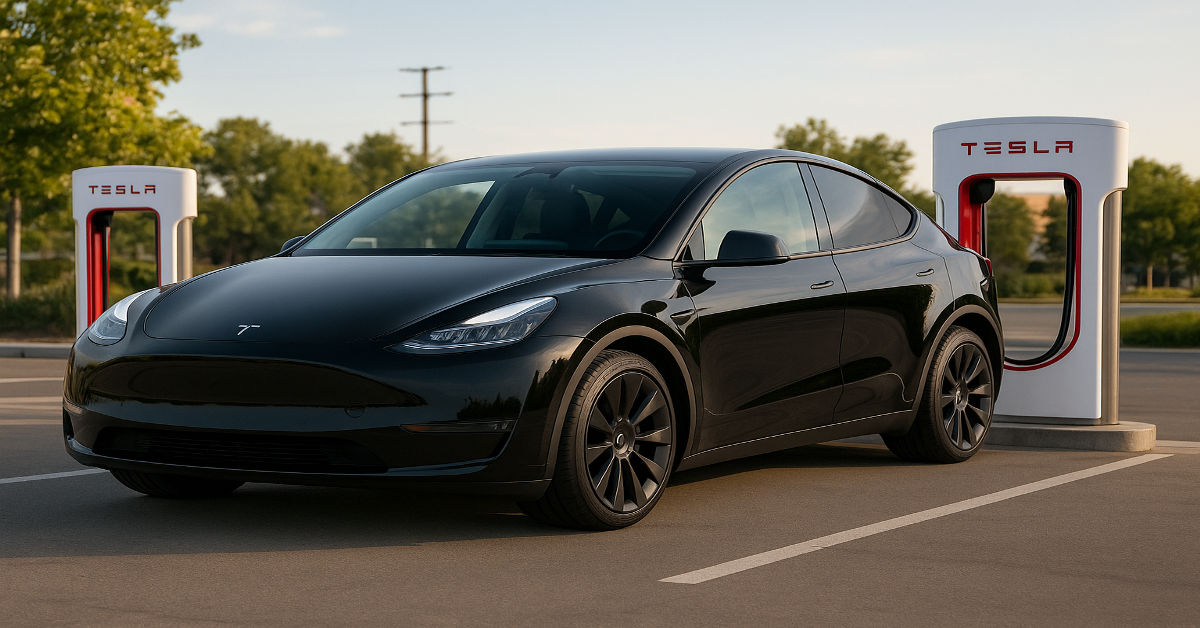
Tesla’s Supercharger Network provides nationwide fast-charging coverage, making long-distance EV travel seamless. Global EV manufacturers are opening factories in India to cut costs.
Market Strengths
-
First-mover advantage and strong brand loyalty
-
Advanced battery and software technology
-
Over-the-air (OTA) software updates
-
Massive Giga factories in Texas and Nevada
Tesla’s dominance continues, with the company maintaining over 50% of the U.S. EV market share in 2025.
Ford Motor Company – Legacy Meets Electrification
Ford has successfully blended its rich automotive history with futuristic electric innovation. The company’s push into EVs began with the Mustang Mach-E, followed by the incredibly popular F-150 Lightning pickup. EV manufacturers are adding more service centres across small towns.
Top EV Models
-
Mustang Mach-E: A sporty electric SUV with a balance of performance and practicality.
-
F-150 Lightning: America’s favourite truck, now fully electric, offering instant torque and practical features like a power export function.
Strategic Highlights
-
$50 billion EV investment through 2026
-
BlueOval City mega plant in Tennessee
-
Focus on commercial EVs through Ford Pro
Ford’s aggressive EV strategy positions it as one of the most credible competitors to Tesla in the U.S. market.
General Motors (Chevrolet, GMC, Cadillac)
General Motors (GM) is determined to achieve an all-electric future by 2035. Its Ultium battery platform is the cornerstone of GM’s EV expansion, enabling flexibility across multiple vehicle segments.
Popular EV Models
-
Chevrolet Bolt EV and EUV: Affordable and efficient compact EVs.
-
GMC Hummer EV: A luxury off-roading powerhouse.
-
Cadillac Lyriq: A premium electric SUV redefining American luxury.
GM’s EV Vision
-
Invest $35 billion in electric and autonomous vehicles
-
Convert major plants for EV production
-
Launch more than 30 EV models globally by 2030
GM’s strong R&D capabilities and wide dealership network provide it with a significant advantage in scaling EV adoption.
Rivian Automotive – Innovation in Adventure EVs
Rivian has made waves in the electric vehicle space with its adventure-ready electric trucks and SUVs. Founded in 2009, Rivian focuses on durability, sustainability, and off-road performance.
Popular Models
-
Rivian R1T: An electric pickup truck designed for adventure.
-
Rivian R1S: A luxury electric SUV for families and outdoor enthusiasts.
-
Amazon Electric Vans: Built under a major partnership to electrify delivery fleets.
Unique Features
-
Built-in gear tunnel and camp kitchen options
-
Exceptional off-road capabilities
-
Long driving range (up to 400 miles on select trims)
Rivian’s vehicles target a niche but rapidly growing segment of eco-conscious adventurers.
Lucid Motors – Luxury and Efficiency Combined
Lucid Motors, headquartered in California, is a premium EV manufacturer focusing on performance and efficiency. Founded by former Tesla engineers, Lucid aims to create the world’s most advanced electric sedans.
Flagship Model
-
Lucid Air: Known for its 500+ mile range per charge and cutting-edge aerodynamics.
-
Lucid Gravity (upcoming SUV): Expanding the luxury EV portfolio.
Highlights
-
Advanced battery systems with high energy density
-
Exceptional interior craftsmanship
-
Competes directly with high-end Tesla and Mercedes EVs
Lucid is gradually expanding its U.S. retail presence and factory capacity in Arizona, appealing to the premium market.
Hyundai Motor America – Quality and Affordability
Hyundai, though a South Korean brand, has a major presence in the U.S. market with manufacturing and R&D centers in America. Its Ioniq lineup combines style, efficiency, and affordability.
Top Models
-
Hyundai Ioniq 5: A retro-inspired crossover with futuristic tech.
-
Ioniq 6: A sleek, aerodynamic electric sedan offering excellent range.
Strengths
-
Competitive pricing
-
Innovative 800V ultra-fast charging platform
-
10-year/100,000-mile warranty
Hyundai’s rapid EV adoption has helped it become a top international contributor to U.S. EV growth.
Volkswagen Group of America
Volkswagen (VW) has significantly ramped up its EV presence with the ID.4 crossover leading the charge. The company plans to establish local EV production in Tennessee to boost supply and reduce costs.
Popular EVs
-
ID.4: A family-friendly SUV with solid range and comfort.
-
ID. Buzz: A modern, electric version of the classic VW Microbus.
VW’s investment in U.S. EV manufacturing underscores its commitment to the American EV transition.
BMW USA – Performance and Premium Electric Mobility
BMW continues its legacy of performance and luxury in the electric space. Its latest i-series models offer a perfect blend of comfort, style, and cutting-edge technology.
Popular Models
-
BMW i4: Sporty electric sedan with thrilling performance.
-
BMW iX: Luxury SUV with long range and high-end interior.
-
BMW i7: The electric version of its flagship 7-series sedan.
BMW’s EV lineup reflects German engineering excellence tailored for the U.S. market.
Nissan North America – The EV Veteran
Nissan was among the first automakers to popularize electric mobility in the U.S. with the Nissan Leaf, launched in 2010. Today, Nissan continues to expand its EV portfolio.
Current Models
-
Nissan Leaf: Reliable and affordable EV for city driving.
-
Nissan Ariya: A sleek crossover with up to 304 miles of range.
Focus Areas
-
Competitive pricing for mainstream adoption
-
Strategic partnerships for battery technology advancement
Nissan remains a trusted choice for buyers seeking affordable electric options.
Toyota Motor North America – Gradual but Steady Transition
Although Toyota pioneered hybrid technology with the Prius, it has been slower to adopt full electrification. However, Toyota is now making strong moves toward all-electric models.
Key Models
-
Toyota bZ4X: The company’s first dedicated electric SUV.
-
Lexus RZ: A luxury electric crossover offering refined comfort.
EV Strategy
-
Plans to launch 30 EV models globally by 2030
-
Heavy investment in solid-state battery technology
Toyota’s approach emphasizes long-term reliability and gradual EV ecosystem development.
Comparison of Key EV Features by Brand
| Brand | Average Range (miles) | Price Range (USD) | Charging Speed | Distinctive Feature |
|---|---|---|---|---|
| Tesla | 300–400 | $40,000–$110,000 | Supercharger (250 kW) | Autopilot & OTA updates |
| Ford | 250–350 | $45,000–$90,000 | BlueOval Charge Network | Truck-based EV design |
| GM | 240–400 | $35,000–$100,000 | Ultium Platform | Diverse model range |
| Rivian | 260–400 | $70,000–$95,000 | DC Fast Charging | Adventure focus |
| Lucid | 400–520 | $80,000–$150,000 | 300 kW Fast Charging | Luxury and efficiency |
| Hyundai | 250–350 | $40,000–$60,000 | 800V Charging | Futuristic design |
| VW | 240–280 | $40,000–$60,000 | Electrify America | Practical family EVs |
| BMW | 280–350 | $55,000–$120,000 | 200 kW Fast Charging | Premium interiors |
| Nissan | 150–300 | $30,000–$50,000 | CHAdeMO/CCS | Affordable EV entry |
| Toyota | 220–250 | $42,000–$60,000 | 150 kW Fast Charging | Hybrid-to-EV transition |
The Future of EV Manufacturing in the US
The U.S. electric vehicle market is projected to exceed 8 million annual sales by 2030, supported by:
-
Federal tax incentives under the Inflation Reduction Act (IRA)
-
Growing EV infrastructure (over 170,000 public chargers by 2025)
-
Increased consumer confidence in battery technology
Emerging Trends
-
Expansion of EV battery recycling
-
Domestic lithium and cobalt sourcing
-
Vehicle-to-grid (V2G) technology integration
Startups and global automakers are increasingly investing in U.S.-based production, ensuring a competitive and sustainable EV future.
Conclusion
The transition to electric mobility in the United States is no longer a vision it’s happening now. Companies like Tesla, Ford, GM, Rivian, and Lucid are redefining transportation with innovation, sustainability, and performance. EV manufacturers design and build electric cars, scooters, and buses.
As infrastructure grows and battery costs continue to fall, EV adoption will accelerate further, transforming the American automotive landscape forever. Whether you’re an investor, a car enthusiast, or an eco-conscious driver, understanding the top EV manufacturers in the U.S. gives insight into the technology and strategy powering the future of transportation. New EV manufacturers are launching every year with fresh ideas.